B.C. raises deficit forecast to $13.8 billion as wildfire costs climb
British Columbia’s projected deficit has increased by $450 million since the February budget as higher wildfire spending and refundable tax credits outpace stronger tax revenue. The fiscal update also cuts the province’s 2026 economic-growth forecast and points to continued weakness in employment and housing.

British Columbia has increased its projected 2026-27 deficit to $13.8 billion, up $450 million from the $13.3-billion shortfall forecast in February’s budget. The deterioration comes despite a better-than-expected start to the fiscal year: between April and June, the province recorded a $461-million deficit, compared with the $863 million budgeted for the period. The government now expects to collect $86.3 billion in full-year revenue, $789 million more than initially forecast, but expenses are projected to rise by $1.2 billion to approximately $100.1 billion. Deficits are now forecast at $12.7 billion in 2027-28 and $12 billion in 2028-29, both about $500 million higher than previously projected.
The largest new expense is $614 million in additional wildfire-management costs, while refundable tax credits are expected to cost $458 million more than budgeted because of higher claims for the renter’s tax credit, capital-gains refund and film-production services tax credit. Stronger personal, corporate and sales-tax receipts are helping offset those pressures, including a $471-million increase in personal income-tax revenue and a $416-million corporate-tax gain.
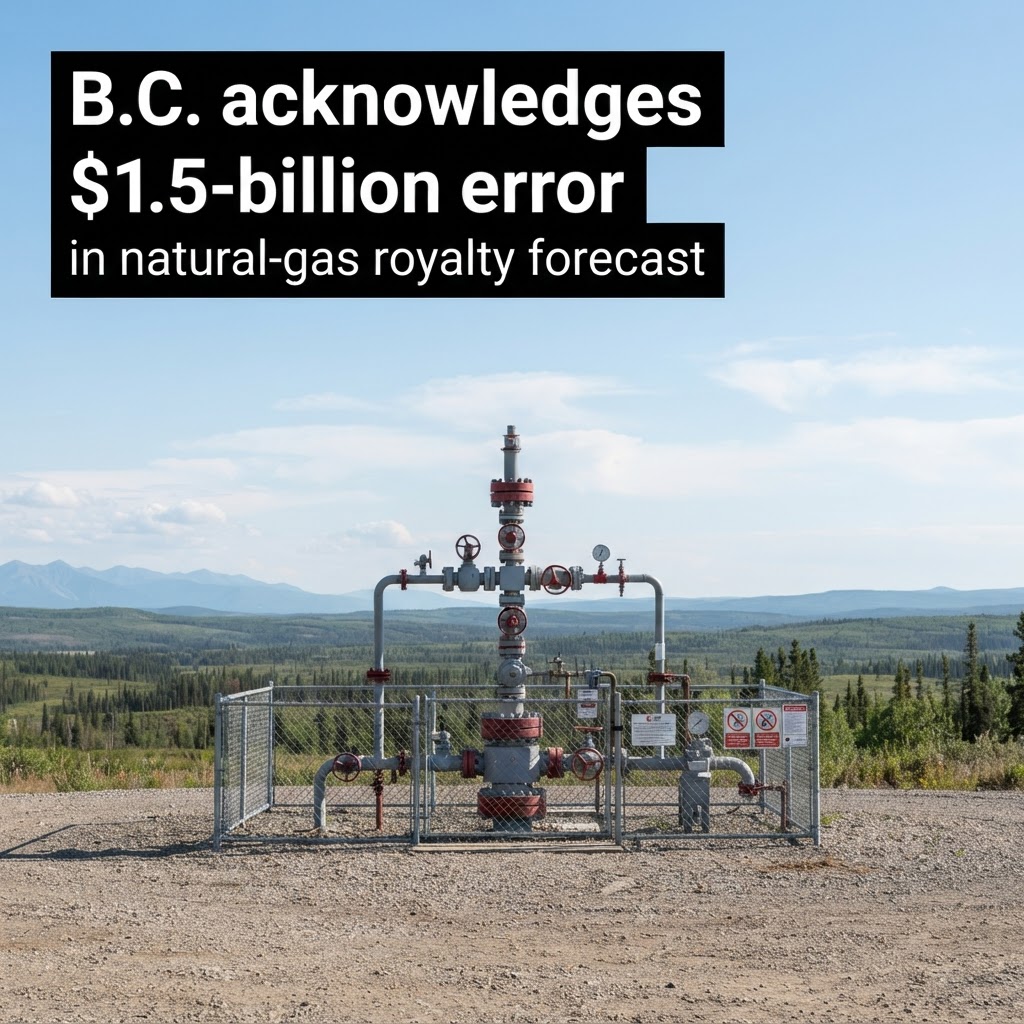
However, property-transfer tax revenue has been reduced by $305 million because of weaker home sales, while natural-gas royalties are down $531 million. The report attributes approximately $306 million of that royalty reduction to the correction of calculation errors in the February budget forecast, with the remainder tied to lower gas-price expectations and updated assumptions for the province’s proposed royalty system. Mining revenue is running $209 million above budget because of improved profitability and higher commodity prices, while forest revenue is down $49 million amid tariffs, lower stumpage rates and difficult industry conditions.
The broader economic outlook is also weaker than it appeared at budget time. The Finance Ministry has cut its forecast for 2026 real GDP growth from 1.3 per cent to 0.9 per cent, reflecting softer employment, housing activity and consumer spending amid U.S. tariffs, slower population growth and global instability. Employment was down 0.6 per cent year over year through August and the provincial unemployment rate stood at 6.5 per cent, while housing starts had fallen 9.3 per cent and home sales were down six per cent through July. There are stronger indicators elsewhere: goods exports rose 4.2 per cent, exports to non-U.S. markets increased 16 per cent and manufacturing shipments grew 9.1 per cent.
The government has also reduced planned taxpayer-supported capital spending by $716 million because of project-timing changes, helping lower the year-end debt forecast. Total provincial debt is nevertheless expected to reach $180.9 billion this fiscal year, including $141.1 billion in taxpayer-supported debt, with the taxpayer-supported debt-to-GDP ratio forecast at 30.1 per cent. The update therefore presents a mixed picture: stronger tax receipts and export diversification offer some protection, but escalating operating costs and sluggish domestic growth continue to push B.C. further from fiscal balance.
Share this article
Comments (0)
No comments yet. Be the first to share your thoughts!